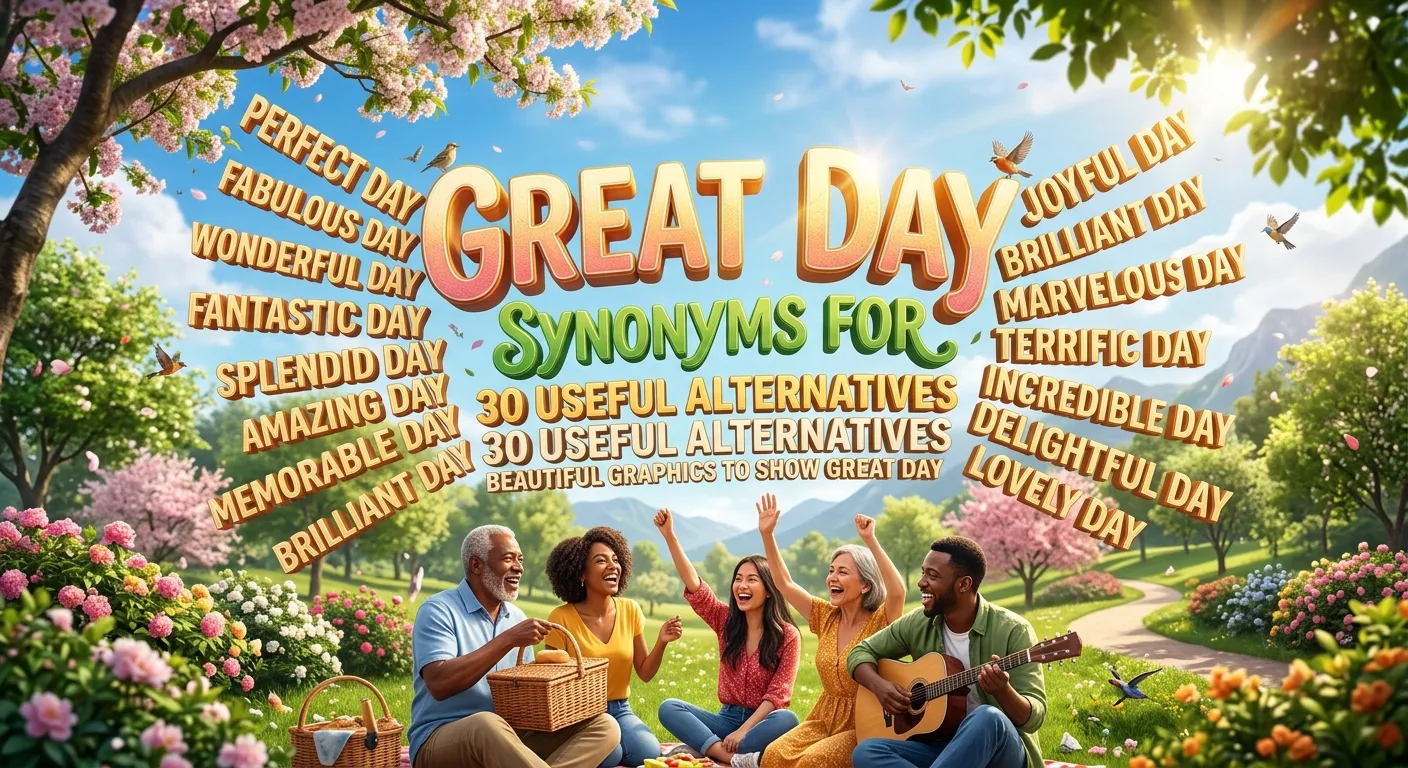
Great day: A day that is especially enjoyable, happy, successful, or memorable.
Quick Answer
A great day is a day that feels especially happy, enjoyable, successful, or memorable. Imagine waking up to good news, spending time with people you love, enjoying your favorite meal, and ending the day feeling proud and relaxed. You might say, “I had a great day!” The phrase is common in everyday English because it is simple and works in many situations. However, using the same phrase again and again can make speech and writing feel repetitive. Learning synonyms and related expressions gives English learners more ways to describe positive experiences. It also helps content writers choose words that match the exact mood of a day. In this article, you will learn the meaning of great day, its synonyms, examples, grammar, history, pronunciation, word formation, and semantic categories.
Meaning of Great Day
Definition
Great day (Noun Phrase):
A day that is very enjoyable, happy, successful, or memorable.
Examples
- We had a great day at the beach.
- She told her friends that she had a great day at school.
Connotative Meaning
Connotation means the feeling or idea that a word or phrase suggests beyond its basic meaning.
- Positive tone: Great day strongly suggests happiness, enjoyment, success, or satisfaction.
- Negative tone: The phrase is normally positive, but it can be used sarcastically to express frustration.
- Neutral tone: In a simple description, it can mean that the day went well without suggesting a strong emotion.
Etymology
Great day is made from two common English words: great and day. Great comes from Old English grēat, meaning “large,” “big,” or “great.” Day comes from Old English dæg, meaning a period of daylight or a 24-hour period.
- Old English (450–1100): Grēat meant large or important, while dæg referred to the daylight period or a day.
- Middle English (1100–1500): Great developed into forms such as gret and gained wider meanings, including important or excellent. Day developed from Old English dæg.
- Modern English (1500–Present): Great increasingly developed the meaning “excellent” or “very good.” Together, great day became a natural expression for a particularly enjoyable, successful, or memorable day.
Pronunciation (IPA)
- IPA: /ɡreɪt deɪ/
- Syllables: great day
Affixation Pattern of Great Day
Great day is a noun phrase, not a single derived word. Therefore, it does not have one shared prefix or suffix.
- Root: great + day
- Prefix: None
- Suffix: None
- Word formations:
- Great: adjective
- Greatness: noun
- Greatly: adverb
- Greater: comparative adjective
- Greatest: superlative adjective
- Day: noun
- Daily: adjective/adverb
- Daytime: noun/adjective
- Daylight: noun
- Daydream: noun/verb
30 Synonyms of Great Day With Meaning & Examples
Note: Because great day is an expression rather than a single word, some alternatives below are close expressions that describe a happy, enjoyable, successful, or memorable day.
1. Wonderful Day (Noun Phrase)
Meaning: A day that is extremely enjoyable or pleasing.
Examples:
- We had a wonderful day together.
- It was a wonderful day for a picnic.
2. Fantastic Day (Noun Phrase)
Meaning: A day that is extremely enjoyable or exciting.
Examples:
- We had a fantastic day at the theme park.
- She said it had been a fantastic day.
3. Amazing Day (Noun Phrase)
Meaning: A day that is surprisingly enjoyable or impressive.
Examples:
- We had an amazing day in the mountains.
- My birthday turned into an amazing day.
4. Excellent Day (Noun Phrase)
Meaning: A day that is very good or successful.
Examples:
- We had an excellent day at the conference.
- The team had an excellent day at work.
5. Awesome Day (Noun Phrase)
Meaning: A day that is extremely enjoyable or impressive, especially in informal English.
Examples:
- We had an awesome day at the beach.
- Thanks for such an awesome day!
6. Terrific Day (Noun Phrase)
Meaning: A day that is extremely good or enjoyable.
Examples:
- We had a terrific day at the fair.
- She said she was having a terrific day.
7. Lovely Day (Noun Phrase)
Meaning: A pleasant and enjoyable day.
Examples:
- We had a lovely day in the countryside.
- It was a lovely day to sit outside.
8. Enjoyable Day (Noun Phrase)
Meaning: A day that gives you pleasure or satisfaction.
Examples:
- We had an enjoyable day with our relatives.
- It was an enjoyable day at the museum.
9. Pleasant Day (Noun Phrase)
Meaning: A day that is comfortable, calm, and enjoyable.
Examples:
- We spent a pleasant day by the lake.
- It was a pleasant day with mild weather.
10. Delightful Day (Noun Phrase)
Meaning: A day that is very pleasant and brings happiness.
Examples:
- We had a delightful day in the garden.
- It was a delightful day with close friends.
11. Joyful Day (Noun Phrase)
Meaning: A day filled with happiness and joy.
Examples:
- Her wedding was a joyful day for everyone.
- It was a joyful day for the whole family.
12. Happy Day (Noun Phrase)
Meaning: A day during which a person feels happy.
Examples:
- It was a happy day for the entire family.
- We spent a happy day celebrating her success.
13. Cheerful Day (Noun Phrase)
Meaning: A day characterized by a positive and lively mood.
Examples:
- The festival gave us a cheerful day.
- We enjoyed a cheerful day with our neighbors.
14. Memorable Day (Noun Phrase)
Meaning: A day that is important or special enough to remember for a long time.
Examples:
- Graduation was a memorable day for me.
- It was a memorable day for the whole team.
15. Unforgettable Day (Noun Phrase)
Meaning: A day that is so special or unusual that it is difficult to forget.
Examples:
- Our wedding was an unforgettable day.
- It was an unforgettable day for everyone involved.
16. Special Day (Noun Phrase)
Meaning: A day that has unusual importance or personal meaning.
Examples:
- Today is a special day for our family.
- Her graduation was a special day.
17. Beautiful Day (Noun Phrase)
Meaning: A day that is especially pleasant, enjoyable, or attractive.
Examples:
- We had a beautiful day at the lake.
- It was a beautiful day for a walk.
18. Perfect Day (Noun Phrase)
Meaning: A day that seems to have everything you hoped for.
Examples:
- We had a perfect day at the beach.
- The weather made it a perfect day for a picnic.
19. Glorious Day (Noun Phrase)
Meaning: A remarkably wonderful or impressive day.
Examples:
- It was a glorious day for the winning team.
- We enjoyed a glorious day in the countryside.
20. Successful Day (Noun Phrase)
Meaning: A day when important goals or tasks are achieved.
Examples:
- It was a successful day at the office.
- The team had a successful day at the event.
21. Productive Day (Noun Phrase)
Meaning: A day when a lot of useful work is completed.
Examples:
- I had a productive day at work.
- She felt proud after such a productive day.
22. Rewarding Day (Noun Phrase)
Meaning: A day that gives you a strong sense of satisfaction or achievement.
Examples:
- Helping the students made it a rewarding day.
- It was a rewarding day for the volunteers.
23. Fulfilling Day (Noun Phrase)
Meaning: A day that gives you a strong feeling of purpose or satisfaction.
Examples:
- Teaching the children was part of a fulfilling day.
- She described it as a deeply fulfilling day.
24. Exciting Day (Noun Phrase)
Meaning: A day filled with interesting or thrilling experiences.
Examples:
- We had an exciting day at the amusement park.
- It was an exciting day for the young players.
25. Eventful Day (Noun Phrase)
Meaning: A day during which many important or interesting things happen.
Examples:
- It was an eventful day at school.
- We had an eventful day during our trip.
26. Fun-Filled Day (Noun Phrase)
Meaning: A day full of enjoyable activities.
Examples:
- The children had a fun-filled day at the park.
- We planned a fun-filled day for the visitors.
27. Blissful Day (Noun Phrase)
Meaning: A day filled with deep happiness, peace, or contentment.
Examples:
- We spent a blissful day by the sea.
- It was a blissful day away from the busy city.
28. Thrilling Day (Noun Phrase)
Meaning: A day filled with excitement and strong emotions.
Examples:
- It was a thrilling day for the racing fans.
- We had a thrilling day at the adventure park.
29. Remarkable Day (Noun Phrase)
Meaning: A day that is unusually special, impressive, or memorable.
Examples:
- It was a remarkable day in the company’s history.
- Her first performance was part of a remarkable day.
30. Day to Remember (Noun Phrase)
Meaning: A very special or memorable day that people will remember for a long time.
Examples:
- Our wedding was truly a day to remember.
- The championship victory gave the fans a day to remember.
Prototype Meaning
The most typical meaning of great day is a very enjoyable, happy, or successful day. When people hear this phrase, they usually imagine a day filled with positive experiences, such as spending time with loved ones, achieving a goal, enjoying good weather, celebrating an event, or simply feeling happy and relaxed. The exact reason for the positive feeling depends on the context.
Prototype Categorization
The 30 alternatives can be grouped by the type of positive experience they describe. This helps writers choose a more precise expression instead of using great day for every situation.
- General positive experiences: wonderful day, fantastic day, amazing day, excellent day, awesome day, terrific day useful when you simply want to say that the day was very good.
- Pleasant and calm experiences: lovely day, enjoyable day, pleasant day, delightful day, beautiful day, blissful day best for peaceful, comfortable, or relaxing days.
- Happiness and celebration: joyful day, happy day, cheerful day, special day useful when the focus is on emotional happiness or an important occasion.
- Memorable experiences: memorable day, unforgettable day, remarkable day, day to remember best when the day is likely to stay in someone’s memory.
- Achievement and satisfaction: successful day, productive day, rewarding day, fulfilling day useful when goals are achieved or meaningful work is completed.
- Excitement and activity: exciting day, eventful day, fun-filled day, thrilling day best for days packed with activities, surprises, or excitement.
- Ideal experiences: perfect day, glorious day useful when the day feels exceptionally good or almost ideal.
Antonyms of Great Day
1. Bad Day (Noun Phrase)
A day when things go badly or a person feels unhappy.
2. Terrible Day (Noun Phrase)
A day filled with very unpleasant experiences.
3. Awful Day (Noun Phrase)
A very unpleasant or difficult day.
4. Difficult Day (Noun Phrase)
A day that involves problems, stress, or hardship.
5. Miserable Day (Noun Phrase)
A day during which someone feels very unhappy or uncomfortable.
6. Disappointing Day (Noun Phrase)
A day that does not meet someone’s hopes or expectations.
Short Questions and Answers
Q: What does great day mean?
A: Great day means a day that is very enjoyable, happy, successful, or memorable.
Q: When should great day be used?
A: Use great day in casual and everyday English when you want to say that a day was very good or enjoyable.
Q: Is great day positive or negative?
A: Great day is normally positive. It expresses happiness, enjoyment, success, or satisfaction. It can be negative only when used sarcastically.
Q: How is it different from similar words?
A: Great day is a broad expression. Perfect day suggests that almost everything went as hoped, memorable day focuses on lasting importance, productive day focuses on completed work, and exciting day focuses on strong activity or emotion.
Conclusion
Learning synonyms for great day gives you more ways to describe positive experiences clearly and naturally. Words such as wonderful, fantastic, and amazing work well in everyday conversation, while memorable, rewarding, productive, and fulfilling describe more specific kinds of good days. Expressions such as day to remember adding a stronger sense of importance, while blissful and delightful can describe peaceful happiness. Choosing the right alternative helps you avoid repetition and makes your writing more vivid. It also improves your speaking vocabulary and gives you greater confidence when describing personal experiences. Practice these expressions in short sentences about your own life. The more often you use new vocabulary, the easier it becomes to remember and use naturally.

Amna Akhtar is a writer dedicated to making English easier to understand. She creates research-informed guides on grammar, vocabulary, spelling differences, antonyms, and synonyms, combining careful research with clear, practical explanations. She is also the co-author of the peer-reviewed research article “Determinants of Jobs Satisfaction of Female Teachers: An Evidence from District Hafizabad, Pakistan,”